
Shared vs Cloud Hosting: What’s Best for You?
Selecting the perfect web hosting for your business is tough with so many different options. Shared and cloud hosting are two of the most common options today. They each have pros, cons and technical idiosyncrasies. Knowing these differences can help website owners, small businesses and bloggers make the correct choice. In this guide, we break down shared vs cloud hosting by comparing performance, cost, scalability, reliability and more to see which is right for you.
Understanding Shared and Cloud Hosting
When it comes to hosting, you need to know what the structure is like behind your site. The Hosting Comparison Between Shared Hosting Vs Cloud Hosting This web hosting comparison of shared hosting versus cloud hosting differs in many areas that include for performance, reliability and cost.
What is Shared Hosting?
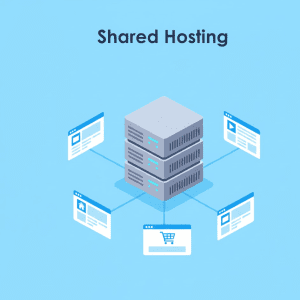
TShared hosting is the most typical variety of web hosting out there. In this type, several different websites share a physical server resources (RAM, CPU, Storage, and more). It is this resource allocation which makes shared hosting so cheap but also somewhat limiting.
- Newbie-friendly hosting: Shared is best for beginners and anyone looking to create a website. It is usually equipped with user-friendly control panels, pre-installed software, and requires no maintenance.
- Limits of shared server: As several websites share the same server, a particularly high traffic on one can influence the others. This effect is sometimes called the “noisy neighbor”.
Shared hosting is often the most cost-effective entry point for new creators. If you’ve decided this is the right path for your project, check out our curated list of the best hosting providers for small blogs to find a plan that fits your budget.
Key Features of Shared Hosting
- Cheap: The plans are very cost-effective – ideal for a personal blog, small commercial site or even a test/development platform.
- Ease of Use: All shared hosting plans come with entry-level user interfaces such as cPanel.
- Limited Resources: Storage, bandwidth, and data are limited for all users.
Pros and Cons of Shared Hosting
- Pros: Cheap, easy to install, good for beginners.
- Cons: Not much control, lower performance when traffic gets heavy, security vulnerability from other sites on the server.
What is Cloud Hosting?
Cloud hosting is a modern hosting solution that utilizes the power of servers with a network to host websites. Nothing like shared hosting, CPU, RAM and storage is scalable here and are provided on the basis of real-time requirement.
- Multiple servers: You won’t see that much in a cloud hosting environment, but it’s there.
- Enhanced host control: Users can customize server functions, increase resources levels which should make their website operate more efficiently.
Cloud hosting has seen a massive surge in adoption due to its scalability and uptime. According to recent web hosting usage statistics, more businesses are migrating away from traditional physical servers to cloud-based environments every year.
Key Features of Cloud Hosting
- Scalability: Websites can scale automatically to accommodate traffic growth with outages.
- Performance: Efficient Page Loads and Uptime with load balancing and distributed servers.
- Pricing-model per use: You pay for consumption, so significantly lower prices than competing cloud builds for start-up websites.
Pros and Cons of Cloud Hosting
- Pros: Good scaling, uptime, security and performance.
- Cons: Little bit more of a learning curve and expense over shared hosting.
Performance Comparison: Shared vs Cloud
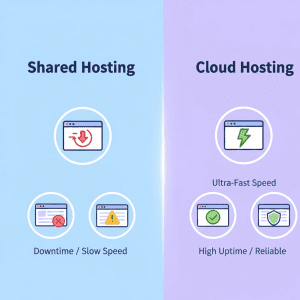
The performance of your website is a huge factor in hosting selection. Measures such as speed, uptime and reliability actually can affect user-experience and SEO.
Speed and Reliability
Cloud hosting generally provides better performance in speed and up-time than shared hosting. As servers resources are allocated in a dynamic manner and resources usage is managed extremely efficently, downtime incidence is drastically reduced while page loads much faster.
TTFB & Core Web Vitals : With cloud based hosting, you can reach better TTFB and load times are faster which means excellent search engine position and lower bounce rate.
Uptime SLA: The majority of cloud hosting providers promise more than 99.9% uptime versus shared hosting plans which may suffer downtime when other users have traffic spikes on the server.
Scalability and Flexibility
One of the main differences is a scalability comparison. The resource limits of shared hosting are, well, “fixed” and if your website traffic jumps up over night you may be left with poor performance or even downtime.
But when you add cloud hosting to the mix, you have the ability for auto-scaling & elasticity, putting resources on autopilot to accommodate traffic spikes. This type of hosting is ideal for expanding businesses, e-commerce stores or websites with high traffic. Meanwhile, shared hosting remains suitable for small websites, portfolios, or personal blogs.
Cost and Pricing Models
Budget is generally a common determining factor regarding where you plan to hold your party. Knowing what the hosting cost comparison is, helps you to determine which one fits into your financial expectations.
Shared Hosting Pricing
Shared hosting is built to be cheap. Shared hosting usually begins around a few dollars per month. Users pay the flat rate and generally get storage, bandwidth, and sometimes SSL certificates in the package.
- Pros: Predictable, low-cost, beginner-friendly.
- Cons: Resources can be limited — slowing down your site in the event that it experiences unexpected traffic.
Cloud Hosting Pricing
Cloud hosting is also based on the pay-per-usage pricing model wherein a business only pays for the computing resources used. It might cost more than shared hosting, but can save you money in the long run, as your site need not be upgraded to a higher tier for expansion.
- Pros: Pay-as-you-go, elastic scaling.
- Cons: Pricing that changes can complicate budgeting a little.
Choosing the Right Hosting for Your Needs
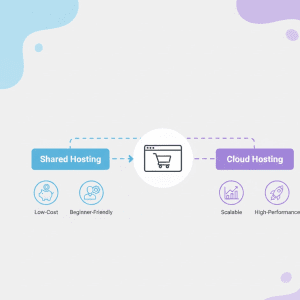
The choice between shared and cloud hosting will depend on the type of website you plan to host, your site’s target audience, and how quickly do you expect it to grow.
For Beginners and Small Websites
Even individuals running personal blogs, small businesses or hobby websites also find some potential benefits of shared hosting that would outweigh the limitations. It offers hosting paired with an easy-to-use control panel and affordable pricing, making it great for beginners.
For Growing Businesses and High-Traffic Sites
When your site expects to grow quickly or you’re likely to have tons of traffic, cloud hosting benefits are undeniable. Reliability and high performance are possible with its geographically distributed servers, autoscaling & elasticity. It’s better for SEO as well, seeing as faster sites with reliable uptimes do better in search.
Technical Considerations and SEO Impacts
Aside from price and performance, technical requirements and other SEO considerations determine the long term success of websites.
Security and Maintenance
Cloud hosting is usually safer than shared hosting, as cloud environments are separated and resources are not shared between the websites, while shared hosting is more exposed as multiple website share the same pool of resources.
SEO and Performance Implications
SEO and hosting Hosting impacts SEO by website speed, uptime, reliability. Slow sites can hurt your search engine rankings, and no one likes waiting forever for a website to load. The correct infrastructure affects hosting infrastructure, uptime & reliability dissimilarities and overall site fitness.
Pros and Cons Recap: Shared vs Cloud Hosting
Now, I will make comparisons between the benefits and drawbacks by taking a look at shared hosting vs cloud hosting. Now that you understand the basics and differences between shared hosting and cloud hosting in terms of performance and cost, it’s useful to compare common advantages and disadvantages associated with each one. That way, readers can make an informed decision based on a variety of factors that may set perfect privacy into context on their website. Serve your own needs first.
Shared Hosting Summary
Benefits of Shared Hosting This is why shared hosting is best for novices small-websites.
- Affordable Cost: Because of its low monthly prices, shared hosting is great for blogs, portfolios and small business sites.
- User-Friendly: Usually because hosting providers will have user-friendly control panels, pre-installed apps and little to no setup.
- Easy set up: Newbies can get started with no technical background.
Limitations:
- Resource Sharing: Sites share the server’s resources with other customers, which causes it to perform poorly when you receive traffic surges — aka “the noisy neighbor effect”.
- Lack of Control: You can’t adjust advanced server settings, so options are limited for scaling a site.
- Security Issues: Security holes in a single site could potentially compromise other sites hosted on the same server.
Tip: Shared web hosting is suitable for potential newbies, beginners, experimenting with new ideas and not expecting high traffic.
Cloud Hosting Summary
Cloud hosting benefits give it the edge over business and high-traffic sites:
- Scalability & Elasticity: Cloud hosting will automatically assign more resources to your site if it begins to experience a surge in traffic.
- High Performance: Distributed servers, server load balancing and resource allocation ensure faster speeds and better reliability.
- Improved Security: Segregated atmospheres defend websites against issues that might affect other users.
- Pay-as-you-go Pricing: Pay only for what you use and save up on hosting cost in the long run.
Considerations:
- Price: Slightly more expensive than shared hosting at first, with variable pricing you need to manage carefully.
- Learning Curve: Cloud hosting may be more challenging to set up for those who are not technically inclined.
Tip: Cloud hosting is ideally suited for medium and large business websites, online stores, and high-traffic projects whose resource needs vary depending on the traffic load.
FAQs About Shared vs Cloud Hosting
Also, To make it better for readers, answering Frequently asked questions (FAQ) brings transparency and Search engine accessibilitY.
1. Which hosting is better for beginners?
Most hosting usually has the advantage for beginners to rely on shared hosting, not because it is easier and cheaper than other hosting types but due to its simplicity, low cost and less maintenance features. Which mean, we get to focus on content and not keeping servers running.
2. Can cloud hosting help my site grow faster?
Yes. It’s auto-scaling & elasticity, and distributed servers would be able to easily handle a sudden spike in traffic without any downtime which makes it a great choice for fast-growing websites.
3. Is cloud hosting better for SEO?
Performance directly impacts SEO. Cloud hosting also provides faster websites, which can directly impact your TTFB & Core Web Vitals scores – metrics that play a role in the search results. You can use shared hosting for SEO, but the heavy traffic of other users can make your site quite slow.
4. How does pricing compare?
Shared Hosting: A fixed price which is based on shared hosting pricing groups, perfect for those who like to count their pennies.
Cloud Hosting: It’s pay-as-you-go pricing can cost less for growing sites but you have to manage resources.
5. Are there hidden risks with shared hosting?
With shared hosting, your website is at risk for security breaches, due to the “noisy neighbor” effect. There are ways to avoid these problems of the cloud with separate server instances.
6. Which hosting is better for small vs high-traffic websites?
Smaller sites: Sharing resources in a shared hosting environment is quite affordable. Popular websites: Cloud hosting offers availability, performance and scaling features.
How We Test and Recommend Hosting
Many articles online promote hosting services for commissions, but trustworthiness is essential. Our approach is fully independent:
- Hands-On Testing: We create test websites on multiple hosting platforms to measure speed, uptime, performance, and reliability.
- Data-Driven Analysis: We evaluate TTFB, Core Web Vitals, server response times, and load handling.
- Transparency: We do not earn commissions on recommendations unless explicitly stated. This ensures readers receive honest guidance.
- Updates & Reviews: Hosting technology evolves, so our recommendations are updated regularly based on the latest performance data.
Note for readers: Trusting firsthand testing rather than marketing claims helps you select the hosting option that truly matches your website’s needs.
Additional Technical Considerations
Security
The isolation is better in the case of cloud hosting which inherently means less vulnerabilities. Shared hosting is also exposed to risk from other websites on the server.
Maintenance & Updates
Most shared hosting providers handle updates automatically, which is great for novice-friendly hosting. For seasoned expert, Cloud hosting dictates some technical configuration but it has the freedom of more services on a self served customer plan.
Performance Monitoring
You need to have, checks if site is up and load times are ‘up’ there. For monitoring server resources and resource allocation, you get better tools with cloud hosting.
Impact on User Experience
Faster, better hosting That improves navigation time on site at your site. Maximizing your hosting experience is vital. The decision between shared hosting and cloud hosting is only the first step. To get the most value out of your hosting plan, you’ll want to learn how to optimize your website’s performance and make smart decisions that improve speed, reliability, and overall user-experience.
Maximizing Your Hosting Experience
Optimizing Shared Hosting
While shared hosting is limiting, there are a few ways to optimize performance:
- Go with Light-Weight Themes and Plugins – Heavy themes & overuse or use of too many plugins that consume server resources are a NO NO.
- Use Caching: Solutions as simple as caching plugins will have real impact on load times and allow your site to run efficiently on a shared environment.
- Watch the traffic: Keep an eye on traffic swings that might affect the performance of your site with high server use.
- Frequent Backups: Shared hosting providers usually have their own backup system in place, but it’s better to keep your own if you want to make sure you never go belly up due to a server crash or anything similar.
Optimizing Cloud Hosting
Cloud hosting boasts sophisticated features, but users can do with some help as well:
- Auto-Scaling Resources: Implement auto-scaling so that your site can accommodate forceful surges in traffic without your services dipping.
- Load Balancer: Spread traffic across multiple servers in order to keep running at top speed.
- Advanced Security Measures: Although cloud hosting is generally safer, you can rest assured your data is being kept secure thanks to SSL certificates, firewalls and regular updates.
- Performance Monitoring: Monitor uptime and server resource utilization through inbuilt analytics and server monitoring tools.
Practical Recommendations for Different Users
Beginners and Small Websites
Shared hosting is a good fit for first-time, individual bloggers who don’t expect high traffic. These users benefit from: Simple installation and low technical maintenence; Predictable, low-cost monthly plans; User-friendly control panels to help you manage your content. And, while even basic optimizations keep ManageWP running smooth even through $6 shared hosting.
Growing Businesses and High-Traffic Websites
Cloud hosting is great for growing websites and businesses with unpredictable traffic. Advantages include: Auto scaling to manage increases in the drivers or riders traffic volume; Distributed servers and load balancing for the fastest load times; Accurate operation and long service life give you a professional experience.
FAQs for Making the Right Hosting Choice
1. How do I know if I need cloud hosting?
If your website expects rapid growth, deals with e-commerce transactions/traffic or has traffic bursts arrive at just about any time, then cloud hosting is the way to go for scalability and reliability.
2. Can shared hosting support an online store?
Yes, It’s OK for small online shops with little traffic to run through shared hosting. That said, if the store scales up to a certain point, cloud hosting might be required in order to ensure speed and uptime.
3. How important is website speed?
Speed influences user experience, engagement, and SEO. Fast sites not only rank better on search engines but also get more conversions.
4. Are there hidden costs with cloud hosting?
Cloud hosting is pay as you go. They are flexible, although users will want to stay aware of their resource consumption or they may be surprised by a bill.
5. Is security a concern with shared hosting?
They are generally very secure, but the security of your site is indirectly affected by any vulnerabilities in other websites sharing the server. A regular update and security plugin would be a recommendation.
Final Thoughts: Which Hosting is Right for You?
The correct hosting for you will depend on your… Goals Technical know how The type of website that you’re building.
Shared Hosting: Ideal for beginners, small websites, and anyone on a tight budget who needs convenient hosting. Shared hosting can be a high-performance environment for personal or small business sites if you optimize your site.
Cloud Hosting: A fast reliable choice for growing sites, high-traffic blogs and businesses. Advanced users will appreciate its control and flexibility to suit any hosting needs.
Regardless of which route you take, make sure your host is up to the task with uptime and support — as well as scalable resources for tracking performance. And when you know what you want and do it right, you can have a high performing site that ranks well and delights your users.
Extra Tips for Success
- General Backups: You should back up your site, whatever kind of hosting it’s on.
- Track Performance: Use software to check speed, uptime and resources.
- Stay Current: Keep software, plugins and security certificates updated.
- Don’t Jump into Bed Without Testing: Look for trial hosting or short-term plans to test out the speed and performance of a host prior to committing long term.
Conclusion
Choosing between shared and cloud hosting is an important decision for the success of your website. By assessing your requirements, recognizing these performance and financial considerations, and then optimising in the best way you can address them, you can make the most of what the web has to offer. Whether you are just launching a new website or scaling an existing one with 30M visitors, an educated hosting decision will result in better UX, SEO rankings and the precious word-of-mouth traffic.